
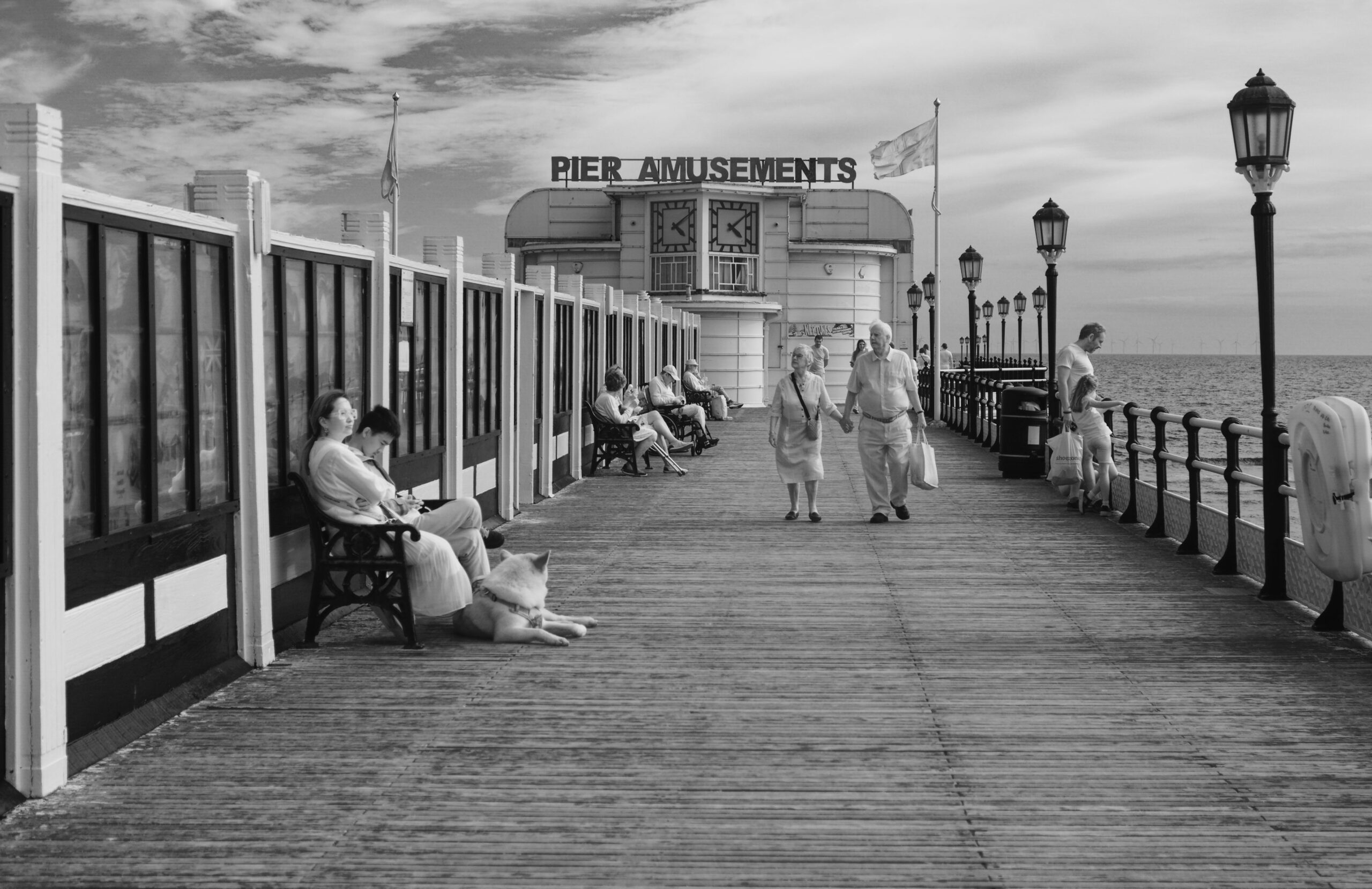
A sunny afternoon on Worthing Pier, late summer 2025. The pier was built in 1862, making it well over a century and a half old, and it is a Grade II listed structure.
This was shot with a 742nm clip filter, one that blocks all visible light and passes only infrared wavelengths to the sensor. With a little careful tonal adjustments in my RAW processing software (DxO PhotoLab) the result looks curiously like it was taken in the 1950s. It could almost be a regular black and white photo, at least until you realise that everyone is wearing white – because most fabrics reflex infrared a lot.
Shooting in pure infrared rather than mixed visible and infrared means you’re always capturing black and white images. A tip: set your camera’s shooting profile to ‘black & white’ so your images look like this in the viewfinder and on the rear screen, otherwise they will look very red and be much harder to judge. If you capture in RAW – which is always the pro-level way to work – then when you open your shots on your computer you’ll then see them in red; the shooting profile isn’t ‘baked into’ a RAW file the way it is with JPEGs. But this does mean you have the maximum flexibility when it comes to optimising and fine-tuning the tonal levels.