
Author: infraredphotography_iufgj6
-
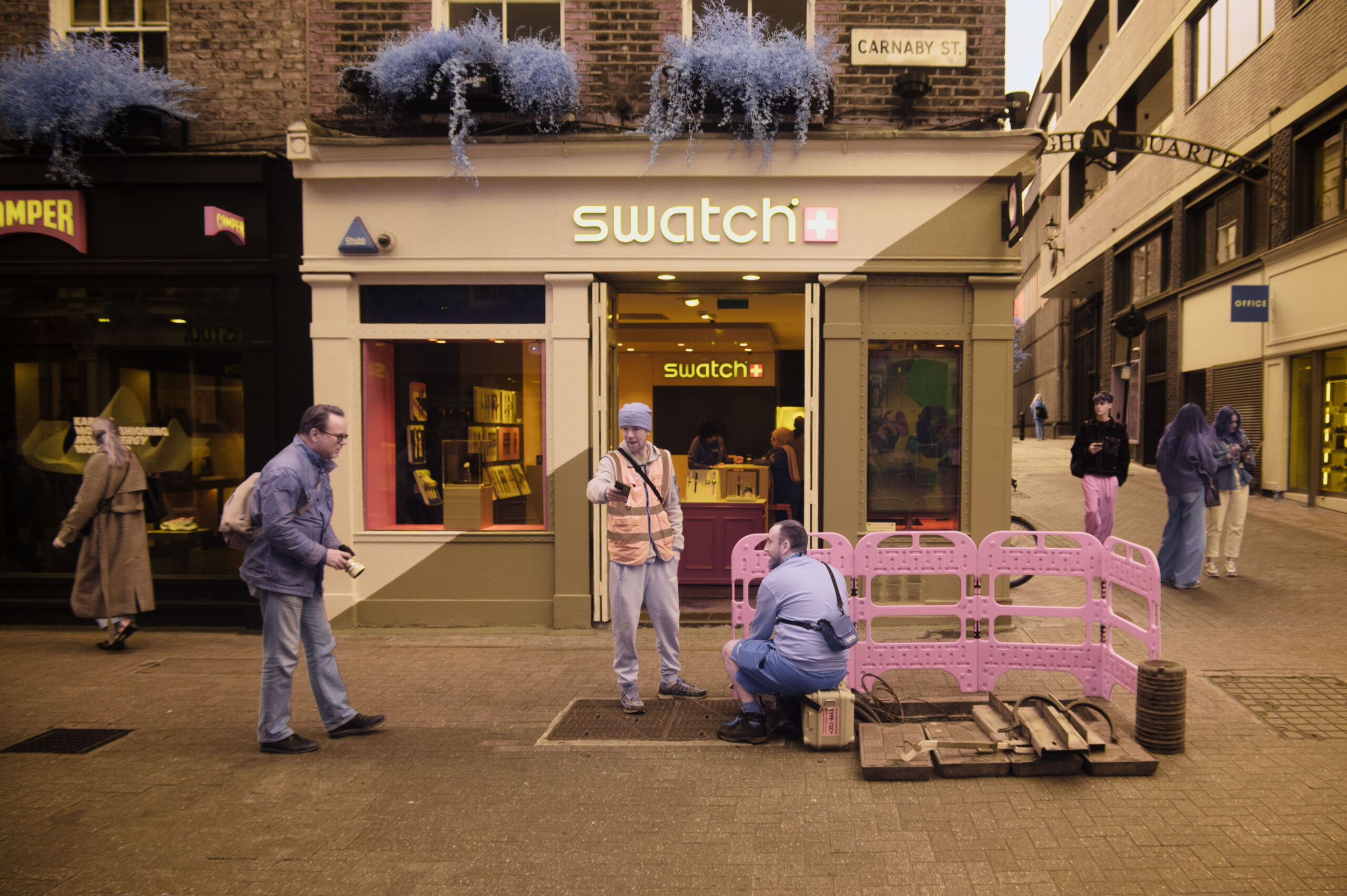
Broadband engineers running new fibre-optic cable in Carnaby Street, in London’s West End. Fellow photographer Frode Hegland is chatting with them. This was shot on a full-spectrum camera fitted with a 550nm Candy Chrome IR filter. This is claimed to simulate the appearance of the legendary Kodak Aerochrome colour IR film. The reality is that…
-
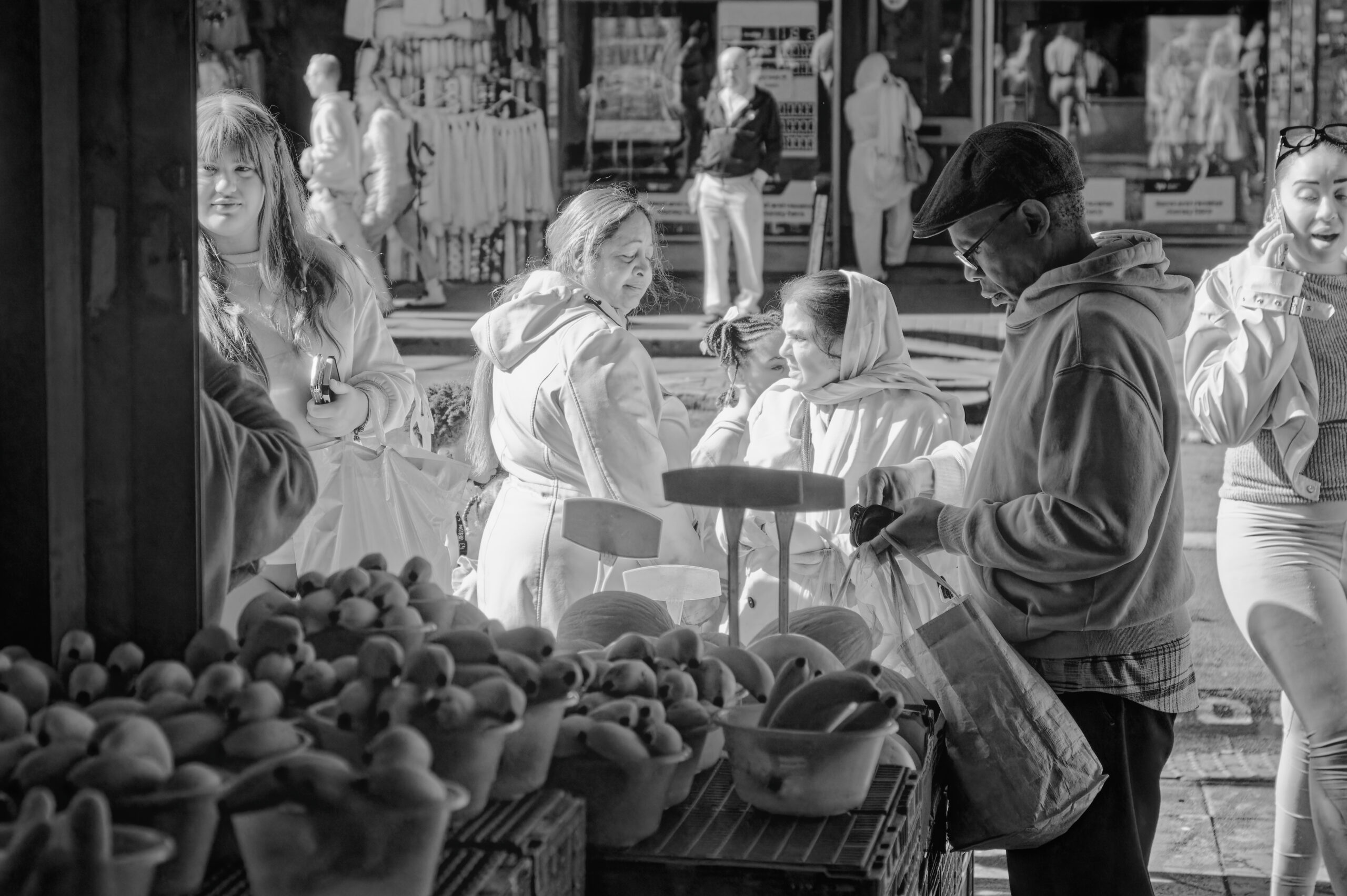
This is for both Adobe Camera Raw and working in Photoshop as well, via the Camera Raw controls found in Filters > Camera Raw. Shooting in the near-IR range (720–850nm) can produce dramatic B&W images. The raw files usually come out very flat, reddish and low in contrast, so some careful processing is needed. Here…
-
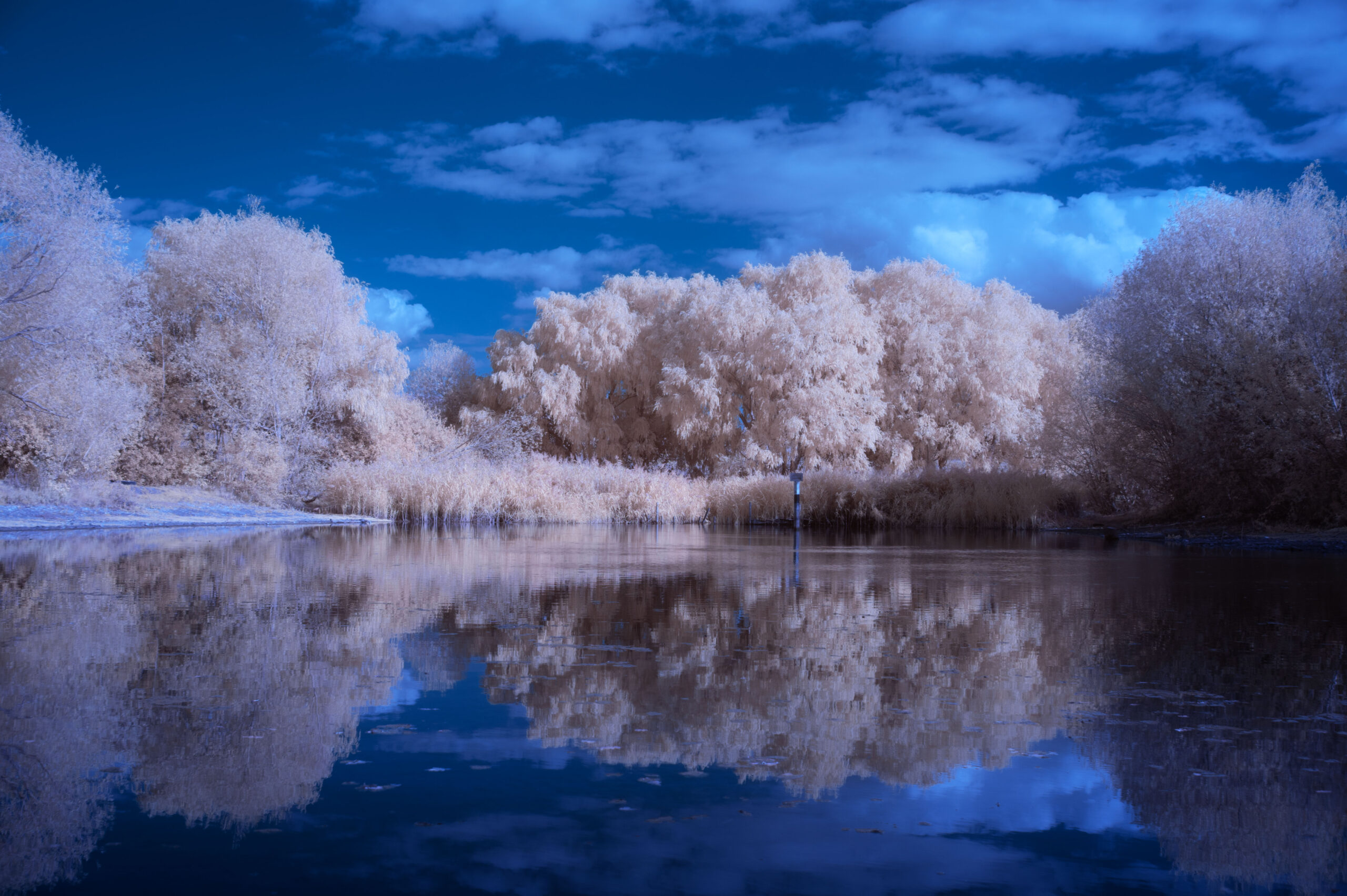
One-Island Pond in Mitcham Common is a haven for wildlife and an oasis of calm and natural beauty right in the heart of suburban South London, in the UK. It is nestled in a large group of trees and bushes within a section of the Common that is hardly visited. This was shot using a…
-
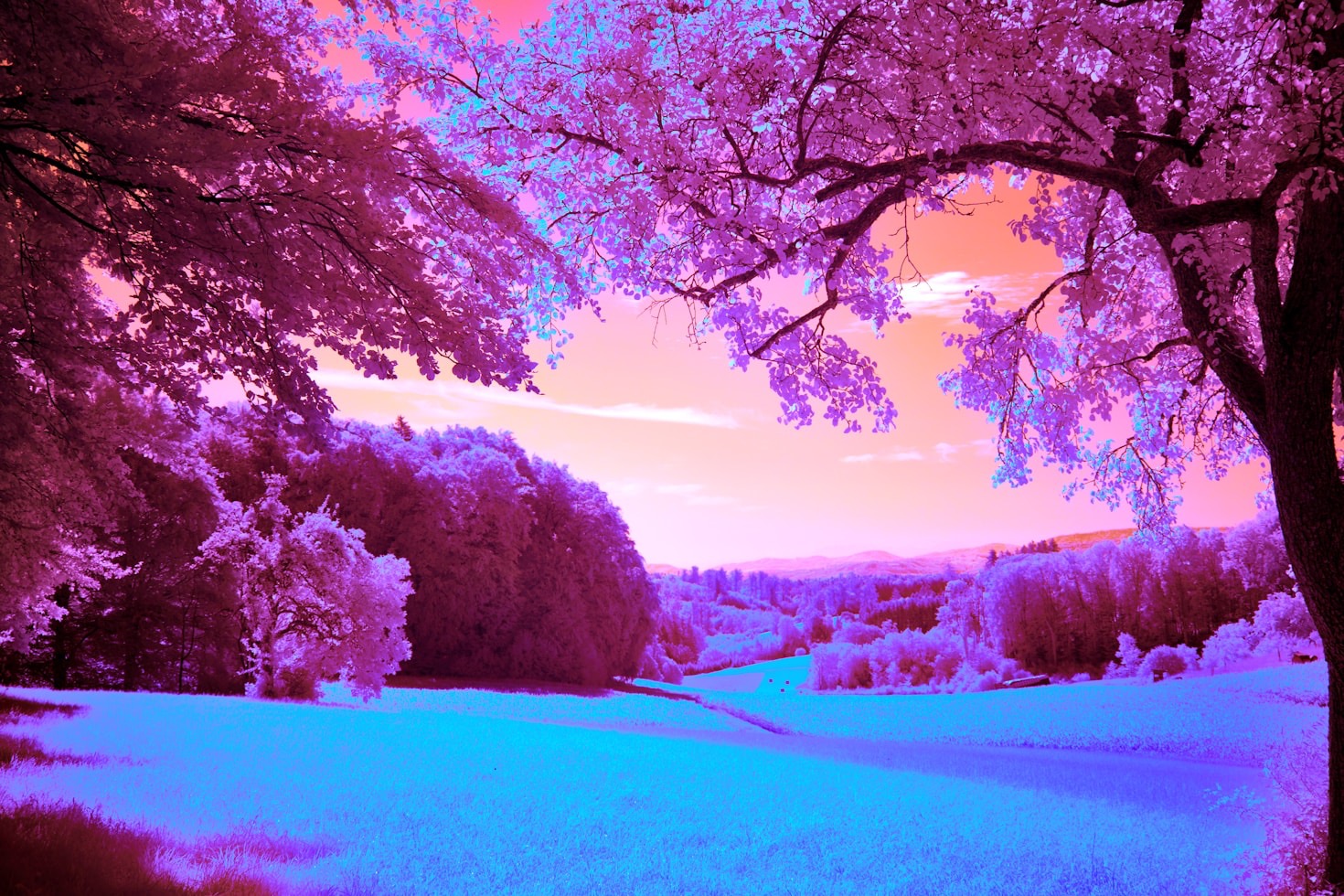
When you shoot using the ‘colour IR’ range of filters (550-665nm) you can go far beyond the classic red/blue channel swap. Here are some advanced tricks that work well in Adobe Camera Raw (ACR) and Photoshop: 1. Push the White Balance Beyond Normal Limits 2. Multi-Channel Swap Variants The classic is Red ↔ Blue swap, but you can…
-
These are the foundational tricks that most IR shooters start with. They are quick and repeatable, and they don’t require diving deep into LAB colour or double-processing techniques. They will give you reliable results and provide a foundation of understanding that will help when you move on to more advanced experimental processes. 1: White Balance on Green…
-
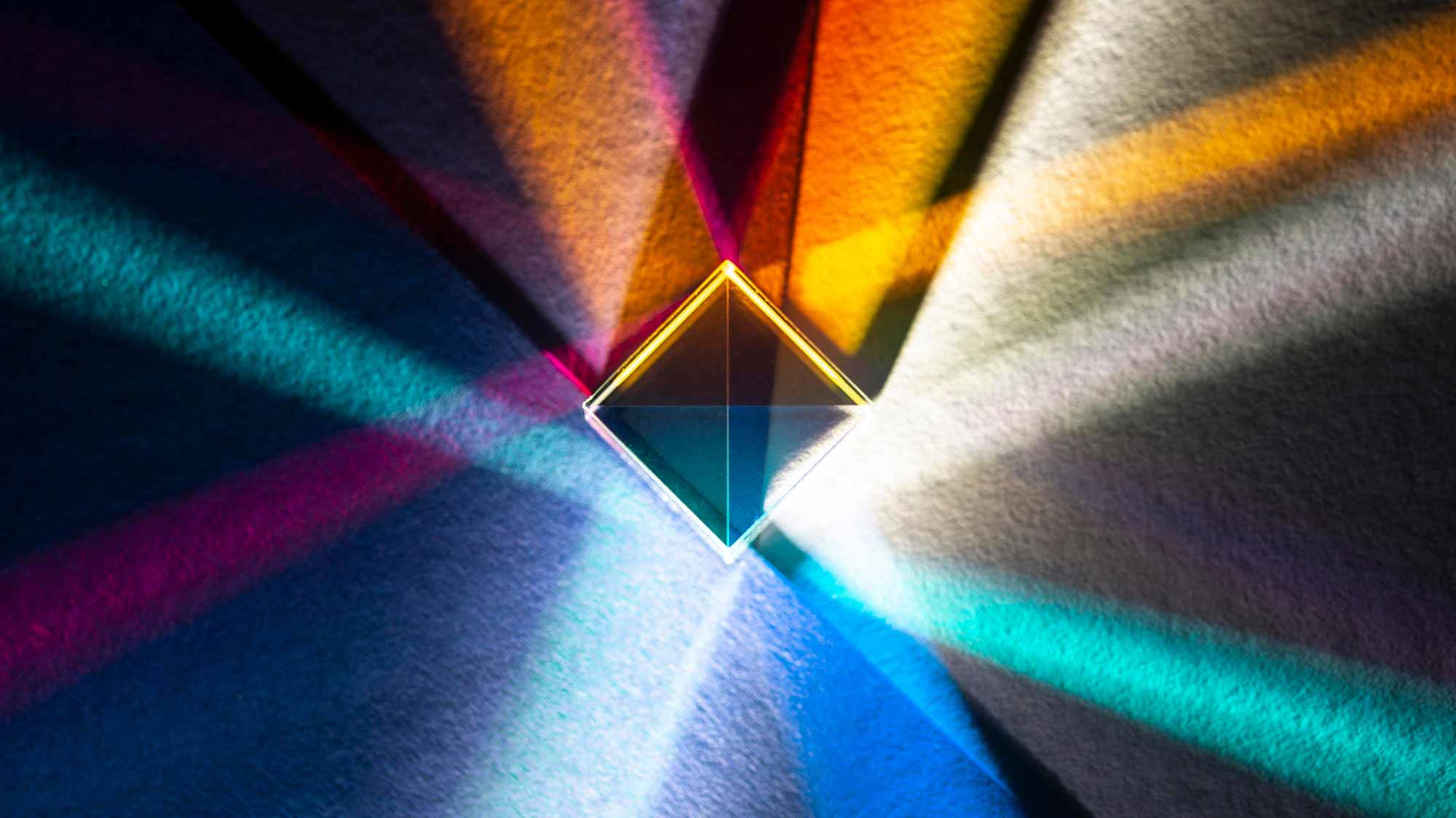
What infrared actually means in photography: In physics, infrared (IR) simply refers to electromagnetic radiation with wavelengths longer than visible red light. The visible spectrum runs from roughly 400-700 nm, while near-infrared (NIR) – the band most relevant to photography – spans 700-1100 nm. Beyond that (mid-IR and thermal IR), you get into wavelengths where standard glass optics and silicon sensors stop…
-
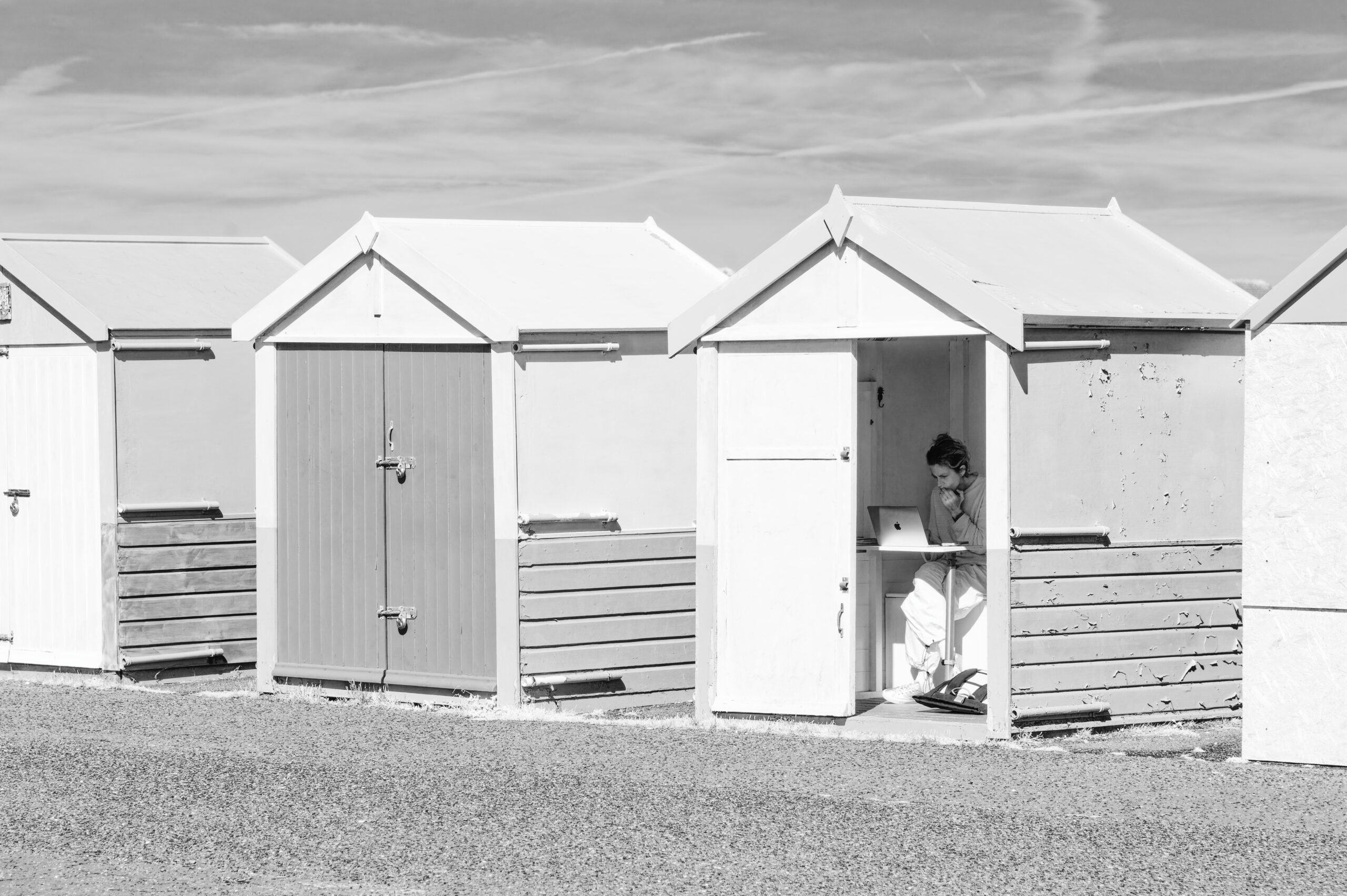
Beach huts in Brighton. Working from home is pretty normal these days, but the views from here beat most! This is one of a set of photographs that were captured using no visible light at all. The camera, a converted ‘full-spectrum’ Nikon Z6, was fitted with a ‘clip’ filter that sits inside the camera body,…
-
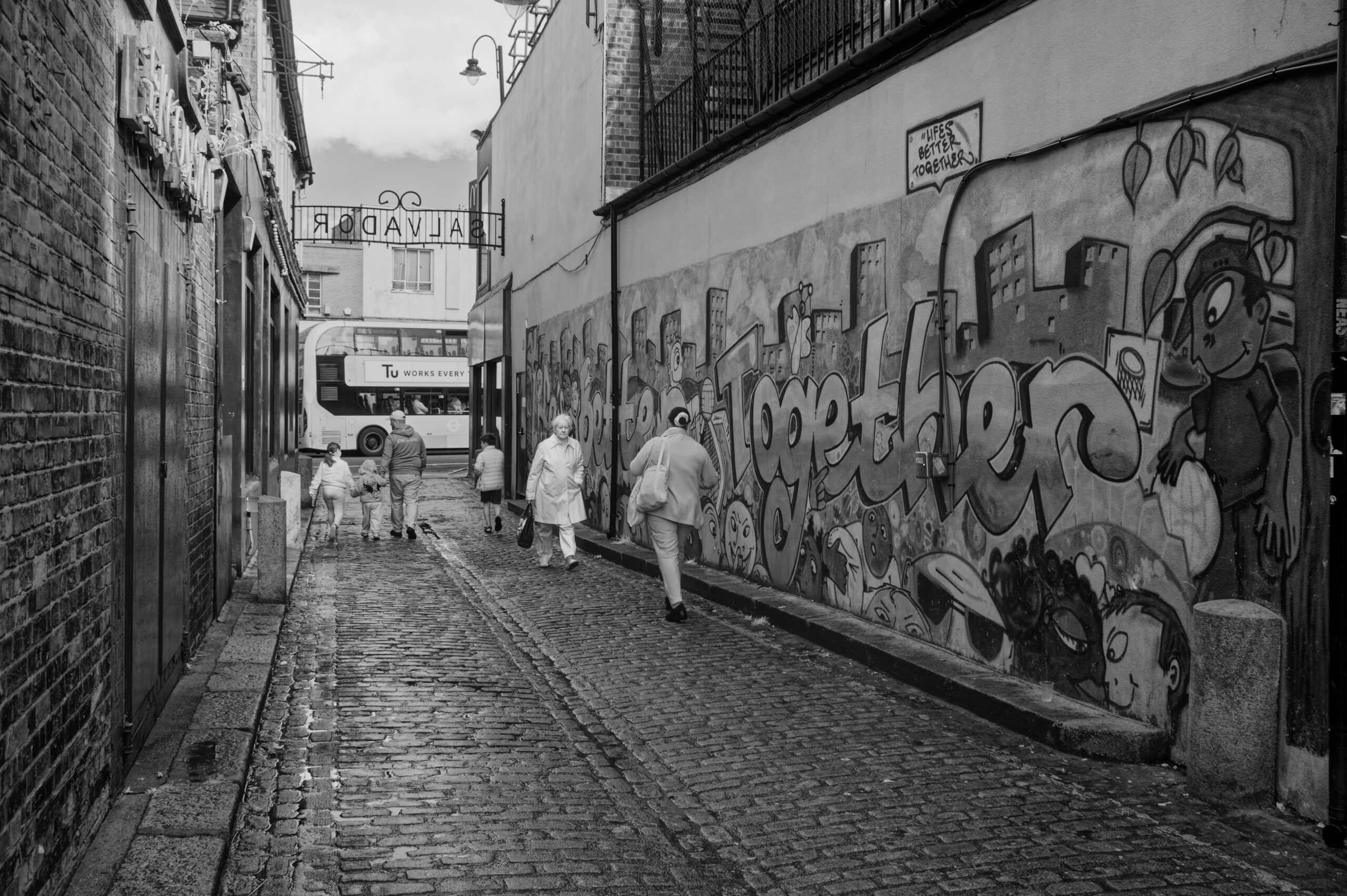
Cobbles used to be the main way streets were paved, an approach to road construction that arrived in Britain with the Romans. The results were highly durable but bumpy, and almost all of these have been replaced or covered over with tarmac. However, some small side streets and alleys around the country still have their…
-
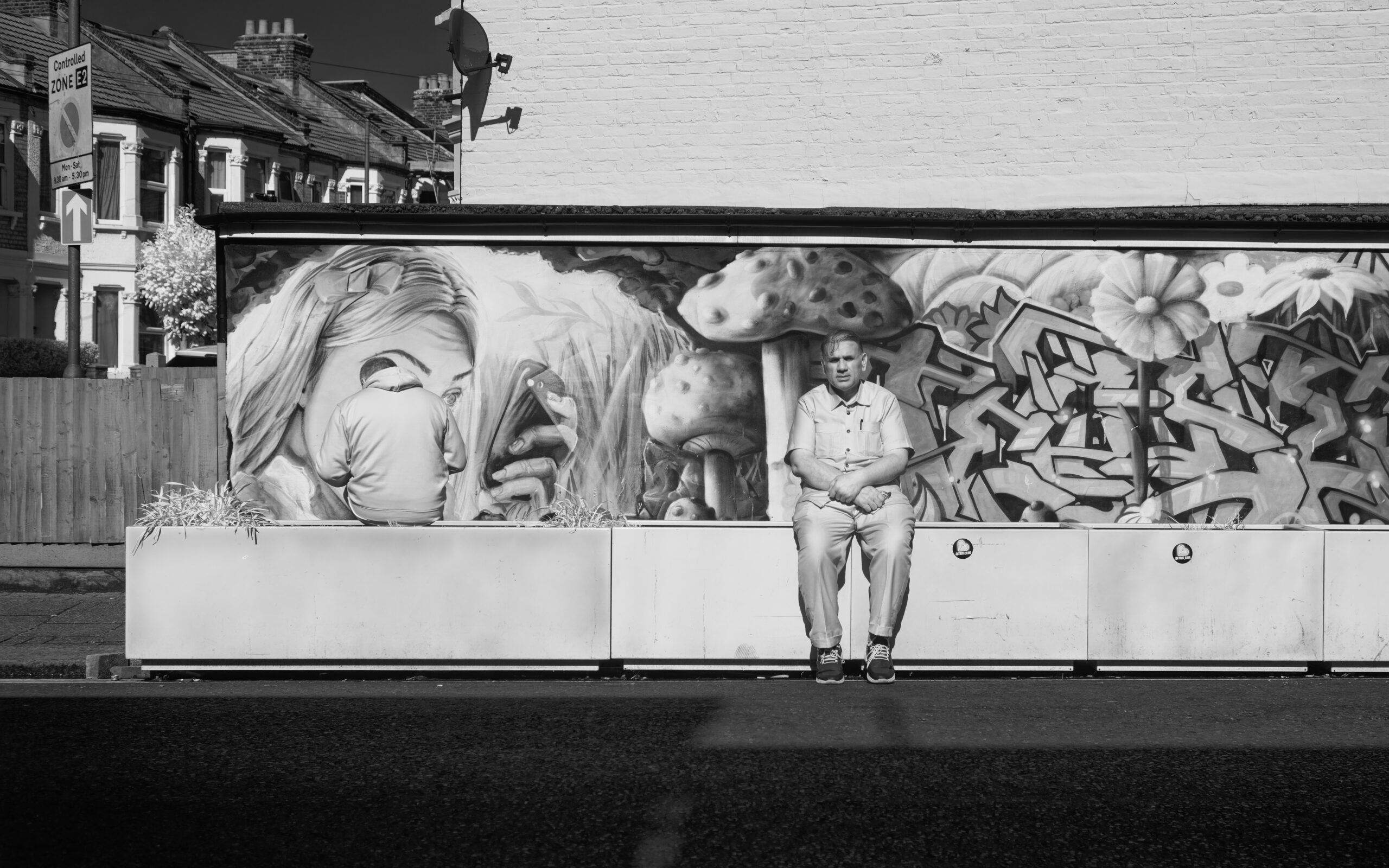
Candid portrait of a man relaxing in front of a street mural, in Tooting, South London. I was taking photos nearby and he called out and said “take my picture.” I was happy to oblige, and the second person sitting facing away quietly completes the composition. Shot using a 720nm IR cut filter that cuts…
-
Buying fruit and vegetables from a stall in Tooting Market, in South London This was shot entirely with ‘invisible light;’ the camera had a 720nm IR cut filter which blocks all visible light. Surfaces are light or dark purely based on their level of infrared reflectivity. Most fabrics tend to become almost white, reflecting a…